


Music Ballz Hop
4.6488.00 Reviews
App Specs
- Version
- 0.0.22
- Updated On
- License
- Free
- Downloads
- 10,000,000+
- Developer
- SAMFEN LIMITED
- Categories
- Music
- Platform
- Android, iOS
Screenshots
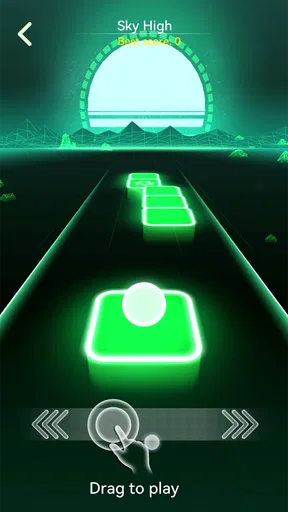
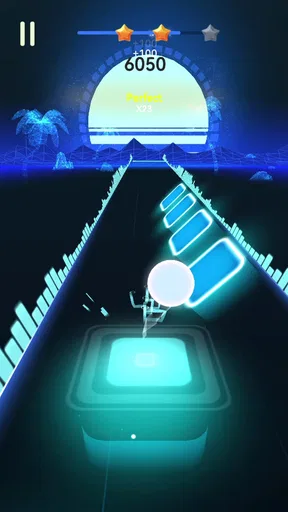
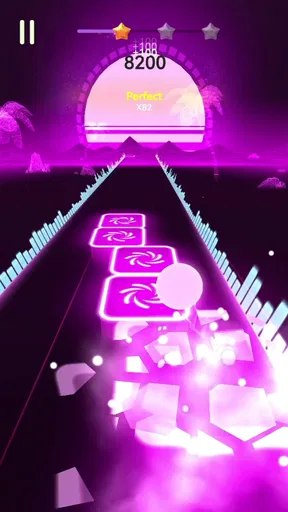
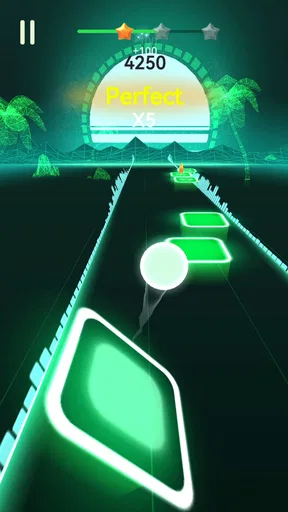
 Analysis by AppCompare
I usually reach for a rhythm game when I have a few spare minutes and want something more hands-on than putting on a playlist. Music Ballz Hop turns a song’s beat into a timing challenge: you tap to make a ball jump, then try to keep your moves lined up as the music carries you forward. The idea is easy to grasp, but staying accurate takes more attention than the simple controls first suggest.
What you are paying for—and what you are not
This is a free music game from SAMFEN LIMITED, rated for Everyone, with optional in-app purchases listed at $6.99 per item. That gives me a useful starting point: you can try the basic experience without paying upfront, while purchases are a separate consideration rather than a required entry fee. I would still check the purchase prompt carefully before confirming anything, especially if a child is playing.
The game has a 4.8 average from around 25,000 ratings and over 10 million installs. Those figures suggest it has found a substantial audience, but they cannot tell you whether its particular songs, timing feel, or difficulty will suit you. For that, the most practical test is a short session: see whether you enjoy reacting to the beat instead of simply listening to it.
It was released on May 31, 2024, and version 0.0.18 is listed for devices running Android 7.0 or later. I’d treat those details as a compatibility checkpoint, not a promise that every device will feel equally responsive. In a timing game, a small difference in how a device registers taps can matter more than it would in a slower puzzle game.
Get Your Groove On
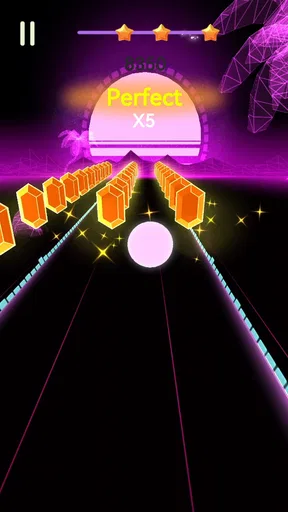
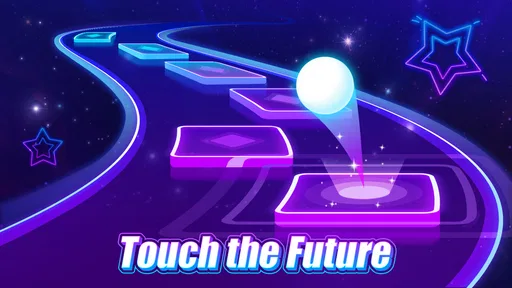
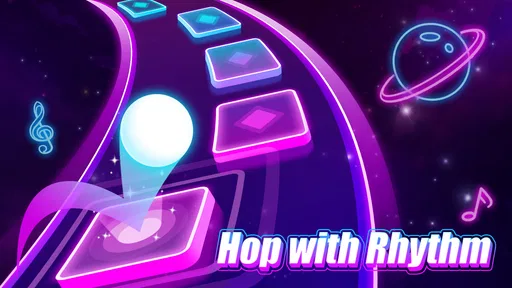
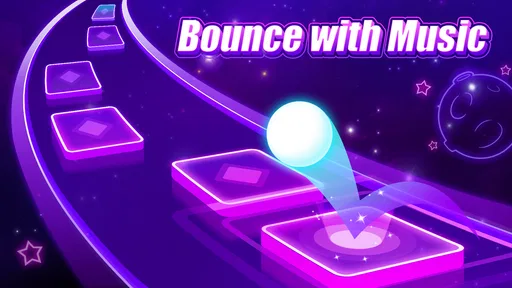
First things first, the concept of Music Ballz Hop is straightforward yet incredibly engaging. You guide a bouncing ball across platforms, perfectly synced to the beat of the music playing in the background. It’s like Guitar Hero meets a platformer, and it’s surprisingly fun to see how well your reflexes match up with your sense of rhythm.
Music Selection
The game offers a wide variety of songs to choose from. Whether you’re into pop hits, classic rock, or soothing instrumental tracks, there’s something here for everyone. The developers have done an excellent job of ensuring there’s a track to suit every mood, and I found myself jumping from one genre to another just to see how the gameplay differed.
A useful way to approach song choice is to pick for clarity rather than familiarity. A track you know well can make the beat easier to anticipate, but a busy arrangement may distract you from the pulse you need to follow. When I want to concentrate, I’d start with a song whose rhythm is easy to hear; when I want variety, I’d switch to something less predictable and accept that it may take a few attempts to settle into the timing.
Worth Reading Before You Choose

Baby Panda World Brings Quick Play to Modern Phones, but Its Game Library Feels Busy

ESPN’s Live Game View Makes Following Close Games Easier

QuizzLand Review: A Good Fit for Short Trivia Breaks, Not Every Player

Basketball Stars: Multiplayer Is Fast, but Can It Recover When Matches Go Wrong?

WEBTOON Turns Phone Updates Into a Better Reading Routine

Link to Windows Runs on Shared Habits, Not Social Feeds
That distinction also helps explain who is likely to enjoy the music side. If you like actively responding to a song, the selection can make each run feel like a small performance. If you mainly want uninterrupted listening, the repeated need to watch the ball and react may get in the way. A regular music player is the better choice when the song itself—not a challenge built around it—is the point.
Visuals and Gameplay
Visually, the game is a treat. The colors are vibrant, and the animations are smooth, which makes the gameplay experience all the more enjoyable. The controls are intuitive, so you won’t find yourself stuck trying to figure out how to play. It’s all about timing your jumps to the rhythm, and once you get the hang of it, you’ll be hopping to the beat like a pro.
The simple input is a strength, but it also puts the focus squarely on timing. I would avoid tapping too aggressively or trying to compensate with a flurry of presses: a rhythm challenge rewards deliberate reactions, and frantic input makes it harder to tell whether a miss came from timing or from rushing. A calmer grip and a clear view of the action are more useful than trying to play faster than the beat.
For a realistic everyday use, imagine waiting for a drink or sitting through a short break between tasks. One song gives you a contained activity that feels more engaging than scrolling, while still being easy to put down afterward. It is less suited to situations where you need to keep shifting your attention—such as walking through a busy place—because the visual timing is part of the play, not a bonus you can ignore.
Compared with music games that ask you to hit a sequence of notes, this one keeps the action centered on guiding a jumping ball with taps. Compared with a standard platform game, the musical beat is the organizing cue rather than just background sound. That makes it approachable if you want a compact rhythm test, but it may feel limited if you want precise instrument-style patterns, broad platforming controls, or a long story to follow.
Challenges and Levels
The game includes various levels, each with different challenges that keep things interesting. As you progress, the difficulty ramps up, testing both your reflexes and your ability to stay in sync with the music. It’s one of those games where you’ll find yourself saying, “just one more level,” and before you know it, an hour has flown by!
When a section starts feeling difficult, I’d treat a retry as practice rather than proof that the game is unfair. Listen for the pulse before focusing on the ball’s movement, and notice whether you tend to react early or late. That small self-check gives you something concrete to change on the next attempt. If you keep repeating the same mistake without understanding its timing, taking a break is likely more helpful than immediately pushing through.
The rising pressure will appeal to players who enjoy improving through repetition. It may be a poor fit if you prefer a relaxed game where failure carries little emotional weight, or if you dislike having to coordinate what you hear with what you see. The same challenge that makes a successful run satisfying can make a casual session frustrating when you are tired or distracted.
There is also a practical trade-off in playing with sound. Because the beat guides your timing, playing quietly or in a noisy place can make the central task harder. If you are in a setting where audio is inconvenient, this is not as naturally suited to silent, one-handed passing time as a simple word or puzzle game. I’d choose a calmer moment when I can hear the track and focus on the screen.
One of my favorite features is the ability to create custom playlists. You can compile your favorite tracks and challenge yourself to see just how well you know your music. It adds a personal touch to the game, making it all the more engaging.
For a playlist session, I’d put a couple of familiar tracks together rather than making every choice a test of a new rhythm. Familiarity gives you a baseline for judging your timing, while an unfamiliar track can be a deliberate change of pace. This is a small but useful way to make a session feel less random: choose music for the kind of challenge you want, not just for the genre you happen to like.
Fair play, spending, and the questions I would ask
The confirmed purchase detail is straightforward: the game is free to install and lists in-app purchases at $6.99 per item. I would not assume that paying changes a score, gives a competitive edge, unlocks a specific song, or removes a particular restriction; those effects are not established here. If spending matters to you, check the wording of each purchase in the game before deciding, and use the device’s purchase controls if a younger player will have access.
That also puts fairness in perspective. The core appeal is personal timing—learning to respond to a beat—rather than a claim that money makes you better at the challenge. I can recommend trying it without paying first, then judging whether the available experience is satisfying for your own routine. A high rating and a large audience are encouraging context, not a reason to buy something you have not decided you want.
People often want to know whether they need musical training. I don’t think the premise requires it: the basic task is to listen, watch, and tap in time, so a sense of rhythm can help but formal lessons are not the point. If you already enjoy rhythm games, that may make the idea feel familiar; if you are new to them, the simple control scheme gives you a clear place to start.
Another sensible question is whether it works as a long-term game or just a quick diversion. Its song-based runs, playlists, and increasing challenge give you reasons to return, but I would choose it for short, repeatable sessions rather than expecting a deep campaign. Players who want a narrative, extensive character progression, or a broad set of movement mechanics should look toward a different kind of game.
As for spending, I would not make a purchase just to see whether the game becomes enjoyable. Start with the free version, decide whether the rhythm-and-jumping loop holds your attention, and only consider an item if its specific description matches something you want. That is a safer approach than treating an optional purchase as a solution to a timing problem or a promise of extra enjoyment.
Who will enjoy it, and where I land
In a world where countless apps and games are vying for our attention, Music Ballz Hop stands out with its unique blend of music and gameplay. It’s perfect for quick sessions during a coffee break or extended play when you’re in the mood for a challenge. Whether you’re a music aficionado or just looking for a fun way to pass the time, this app has got you covered. So why not give it a try? You might just find yourself bouncing to the beat sooner than you think!
I’d recommend it most to someone who likes music-driven reflex games, enjoys retrying a tricky passage, and wants an activity that can fit into a small gap in the day. It is less appealing if you want passive listening, a quiet game that works equally well without audio, or a detailed platform adventure. Those are not flaws for every player; they are simply reasons to choose a different option if that is what you value most.
My trust verdict is measured but positive. The free entry point makes it easy to see whether the basic idea clicks, and the age rating is Everyone, though I would still keep purchase prompts in mind for children. I like the direct connection between the beat and the ball’s movement, and the playlist angle gives me a reason to shape a session around my mood. I would go in expecting a focused rhythm challenge—not a full music library, a guaranteed competitive system, or a sprawling game—and judge it on how satisfying each well-timed run feels.
Pros
- Addictive rhythm-based gameplay.
- Wide range of music tracks.
- Intuitive touch controls.
- Visually appealing graphics.
- Regular updates with new songs.
Cons
- Ads can interrupt gameplay.
- Limited free song selection.
- Requires internet for new tracks.
- Occasional lag on older devices.
- In-app purchases can be pricey.
FAQs for Music Ballz Hop
What is Music Ballz Hop and how does it work?
Music Ballz Hop is a rhythm-based game where players control a bouncing ball in sync with various music tracks. The objective is to keep the ball hopping on designated platforms while following the beat. Players can choose from a wide range of songs and genres, adding to the game's dynamic and engaging experience.
What are the main features of Music Ballz Hop?
Music Ballz Hop offers a variety of features, including an extensive library of popular music tracks, customizable ball skins, and different gameplay modes. The game also includes leaderboards for competitive play and achievements to unlock. These features enhance the replay value and keep the gameplay exciting for users.
Is Music Ballz Hop free to play, and are there in-app purchases?
Music Ballz Hop is free to download and play, but it includes in-app purchases. These purchases allow players to unlock additional songs, skins, and other premium features. While the game can be enjoyed without spending money, purchasing items can enhance the overall experience and provide more customization options.
What are the system requirements for Music Ballz Hop on Android and iOS?
Music Ballz Hop requires Android version 5.0 or higher and iOS 10.0 or later. It is compatible with most modern smartphones and tablets. Ensuring your device meets these requirements will allow for smooth gameplay and an optimal user experience. Regular updates may be needed to access new features and content.
How does Music Ballz Hop handle ads and data privacy?
Music Ballz Hop includes advertisements that support the free-to-play model. Users can choose to remove ads through in-app purchases. Regarding data privacy, the game collects minimal user data to enhance functionality and gameplay. It's recommended to review the app's privacy policy for detailed information on data handling practices.


